
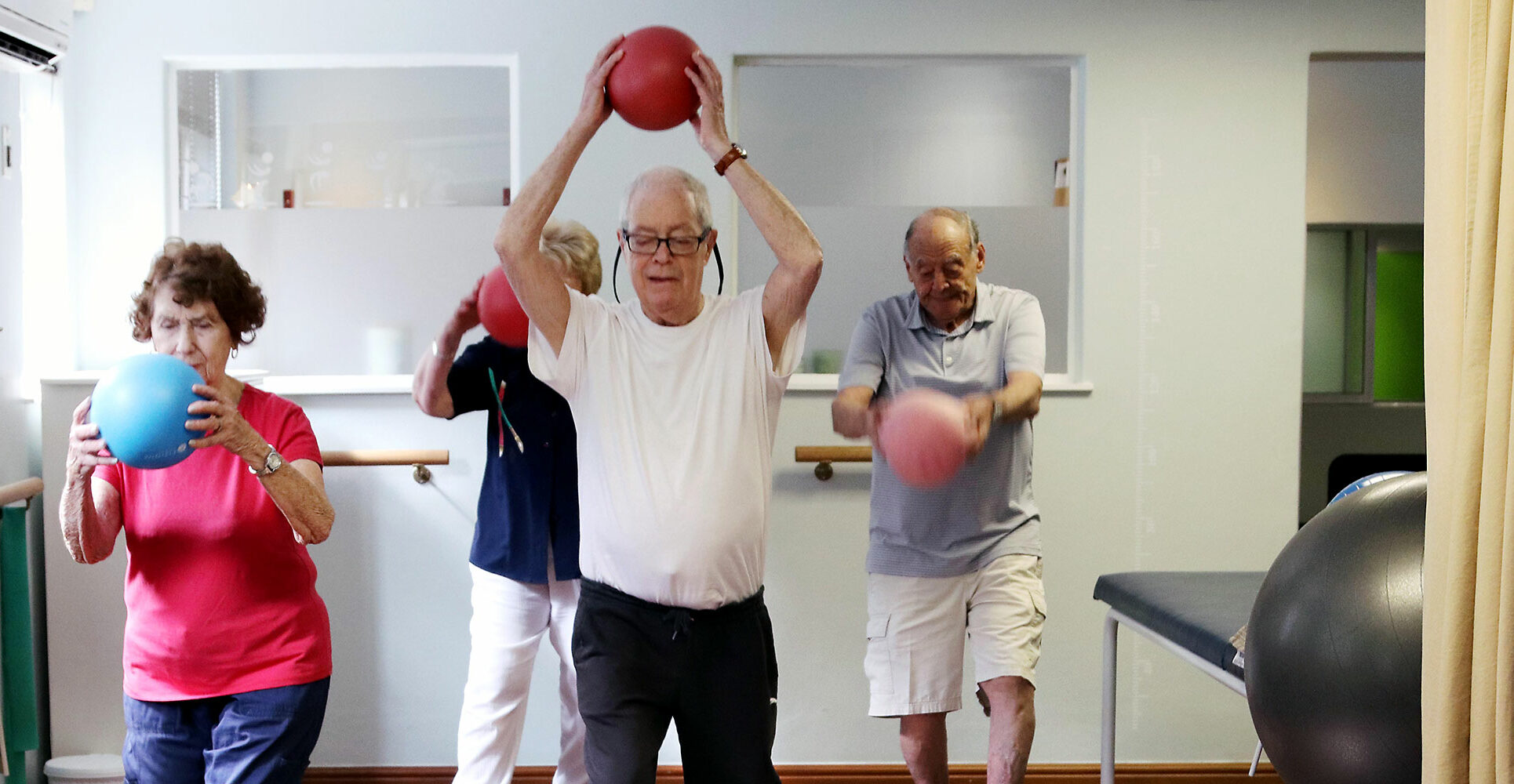
Group Exercise for Older Adults in Johannesburg
There is no shortage of reasons to exercise. Stronger muscles, better balance, a healthier heart: the benefits are well-documented, and most people already know them. What gets talked about less is the reason many older adults actually keep coming back to a structured exercise class: the people.
Group exercise for older adults works on two levels simultaneously, and the second level, the social one, may be just as important as the first.
The physical case for group exercise
For older adults, the physical benefits of regular structured exercise are significant and well-documented. Supervised group classes typically combine elements of balance training, strength work, mobility and cardiovascular conditioning, which together address the main risk factors for falls, loss of independence and chronic disease progression.
A 2025 meta-analysis published in Frontiers in Public Health, which reviewed data from multiple studies on group physical activity in older adults, found improvements in physical health, mental health and social well-being. The physical benefits included improved balance, lower limb strength and functional mobility.
Consistency matters enormously in exercise for older adults, and group settings have a practical advantage here: people turn up. Accountability to other participants and to an instructor keeps attendance rates higher than home exercise programmes, where motivation tends to fade within a few weeks.
What social isolation does to older adults
Social isolation is a significant public health concern for older South Africans. Research from Durban found that nearly half of older adults in residential care met criteria for social isolation, with almost 20 percent experiencing a meaningful reduction in friendship contact. Loneliness and social isolation are independently associated with higher risks of depression, heart disease, cognitive decline and earlier death.
Exercise has a direct role to play here. Group-based physical activity gives older adults a reason to leave the house, a fixed point in the week, and a group of people who share the experience with them. A 2021 review found that group physical activity not only delivered the expected physical benefits but actively improved social connectedness and reduced loneliness in older adult participants.
This is not a minor side effect. For someone who lives alone, or whose social world has contracted after retirement or bereavement, a twice-weekly exercise class can be one of the most meaningful social commitments in the week.
Mental health benefits
The mental health evidence for group exercise in older adults is consistent. Physical activity reduces symptoms of depression and anxiety, improves mood, and is associated with better cognitive function in older age. A 2024 study in Frontiers in Public Health specifically identified social competence as a key mediating factor: group exercise improves how older adults relate to others, which in turn benefits mental health.
The group dynamic matters here too. The shared experience of working towards something, the encouragement of others, and the mild sense of achievement after a session all contribute to improved wellbeing in ways that exercising alone does not fully replicate.
What our group classes involve
At JW Bio in Saxonwold, our group exercise classes for older adults are run by registered biokineticists. We offer two main types:
- Falls prevention classes: focused on balance, lower limb strength, reaction time and confidence on the feet. These are suitable for people who have had a fall, are concerned about falling, or whose doctor has recommended falls prevention exercise.
- Back health classes: targeted at people managing lower back pain, postural problems or spinal conditions. The sessions combine core strengthening, flexibility work and postural awareness.
Classes are small, which means the biokineticist can keep an eye on how each person is moving and adjust exercises where needed. Participants are not expected to have any prior fitness level. The classes are designed to meet people where they are and progress from there.
We also serve residents at Inyoni Creek and Elphin Lodge at Rand Aid in Modderfontein, bringing group exercise directly to retirement village communities.
Is a group class right for you?
Group classes are suitable for most older adults, including people who are managing chronic conditions, recovering from surgery, or returning to exercise after a period of inactivity. If you have specific medical concerns, we can do an individual assessment first to make sure the class is appropriate or design a brief individual programme to run alongside the group sessions.
You do not need to be fit to start. That is the point.
Read next
If muscle loss and weakness are a concern, read our post on sarcopenia and what resistance training does for it. And if you are struggling to sleep, our post on exercise and sleep quality in older adults might be worth a read.
Need a hand?
To find out about current class times and availability, visit our exercise for older adults page or contact us directly. We are happy to talk through which class would suit you best before you commit to anything.